Below-Grade Waterproofing
Dseal HDPE Membrane
High-density polyethylene membranes delivering a tough, chemical-resistant waterproof barrier for foundations, basements, podiums, tunnels and water-containment structures — built to last the life of the structure.
A barrier that lasts
High-Density Polyethylene (HDPE) is a thermoplastic polymer with a predominantly linear molecular structure and high crystallinity (typically 70–80%). That tight molecular packing gives Dseal HDPE membranes their high density, exceptional impermeability, broad chemical resistance and mechanical toughness.
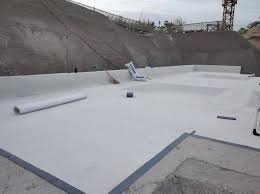
As a waterproofing membrane it forms a continuous, root-resistant barrier that protects structures from groundwater and aggressive soils — available as smooth, textured, self-adhesive, reinforced and bentonite-composite systems for foundations, basements, tunnels and below-grade tanking.
Key Benefits
Why HDPE
Chemical Resistant
Withstands acids, bases, salts and aggressive soils and groundwater.
Watertight
Extremely low permeability barrier against hydrostatic pressure.
Root Resistant
Protects below-grade and green-roof structures from root penetration.
30–100 Yr Life
Outstanding durability, especially for buried applications.
Technical Properties
HDPE typical values
| Property | Typical Value |
|---|---|
| Density | 0.940–0.970 g/cm³ |
| Crystallinity | 70%–80% |
| Tensile strength | 20–37 MPa (2,900–5,800 psi) |
| Permeability | Extremely low (< 10^-13 cm/s) |
| Thickness range | 0.1 mm – 3.0 mm (or thicker) |
| Seam overlap | 75–300 mm |
| Service life | 30–100 years or longer |
| Resistance | Acids, bases, salts; UV (carbon-black grades) |
Membrane Types
Grades for every application
| Type | Thickness | Key Features | Typical Applications |
|---|---|---|---|
| Smooth | 0.1–3.0+ mm | Standard, cost-effective | Foundations, basements, reservoirs |
| Textured | 0.5–3.0+ mm | Friction, slope stability | Landfill liners, embankments, canals |
| Self-Adhesive | 1.0–2.0+ mm | Easy install, less labour | Basements, foundations, tunnels |
| Non-Adhesive | 0.1–3.0+ mm | Versatile, needs seaming | Large-area lining |
| Reinforced | 0.5–3.0+ mm | Higher tensile & stability | High-stress / movement zones |
| HDPE-Bentonite | 1.5–2.5+ mm | Self-sealing | Blindside walls, contaminated soil |
Applications
- Building construction — basement and foundation waterproofing, roofs, terraces, balconies and green roofs
- Underground structures — tunnels, subways and retaining walls
- Water containment — reservoirs, ponds, swimming pools, canals and irrigation systems
- Environmental — landfill liners, wastewater treatment and mining (tailings, heap-leach pads)
Installation
Correct detailing is essential. Dseal HDPE systems are installed with thorough surface preparation, accurate placement and alignment, and reliable seaming — thermal welding (hot-wedge or extrusion), adhesive tapes, or overlapping (typically 75–300 mm). Seams are quality-checked by hydrostatic, vacuum or spark testing, with protective geotextile layers and UV-resistant grades where membranes are exposed.
FAQs
HDPE, answered
What is HDPE membrane used for?
Basement and foundation waterproofing, roofing, tunnels, retaining walls, reservoirs, landfill liners and industrial wastewater containment.
How long does an HDPE membrane last?
Typically 30 to 100 years or longer — buried membranes, protected from UV, last at the upper end of that range.
Is HDPE membrane chemically resistant?
Yes — it resists a broad range of acids, bases and salts, making it ideal for aggressive soils and contaminated ground.
How is HDPE membrane installed?
Surface preparation, placement with correct overlap, then seaming by thermal welding (hot-wedge / extrusion), adhesive tapes or overlapping, with detailing around penetrations and edges.
Can it be used for green roofs?
Yes — its root-resistance makes HDPE well suited to green roofs and landscaped podiums.
HDPE Supply
Waterproofing a foundation or basement?
Share your structure details and we will specify the right Dseal HDPE membrane system.