Joint Backing
Dseal Backer Rods
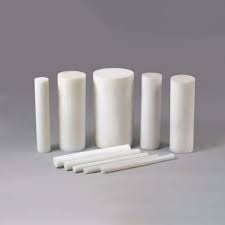
Dseal backer rods are resilient closed-cell polyethylene foam rods that set the correct sealant depth and prevent three-sided adhesion in expansion joints, control joints and other sealed gaps.
Closed-cell foam backing for durable sealed joints
A backer rod is a flexible, compressible cylinder of expanded polyethylene foam that is inserted into a joint before the sealant is applied. By occupying the depth of the joint, the backer rod controls how much sealant is used, provides a firm surface for tooling the sealant and acts as a bond breaker — ensuring the sealant adheres only to the two joint faces and never to the joint base.
Dseal backer rods are non-absorbent and chemically inert, so they resist water and remain stable across a wide temperature range. They suit expansion, isolation, control and paving joints, and double as a practical solution for small gap filling, insulation around windows and doors, and as a sealant reservoir for hourglass-bead applications.
Why Backer Rods
Engineered for correct sealant performance
Closed-cell & non-absorbent
The closed-cell structure does not absorb moisture, giving superior water resistance and keeping the joint stable in wet and humid conditions.
Prevents three-sided adhesion
The rod acts as a bond breaker so the sealant bonds only to the two joint faces, allowing it to stretch and compress freely with joint movement.
Flexible & resilient
Compressible yet resilient, the foam returns to shape after insertion to maintain a firm, consistent backing for tooling the sealant.
Inert & temperature resistant
Chemically inert and stable across a broad temperature range, the rods are compatible with cold- and hot-applied sealants alike.
Types & Sizes
Three types to match every sealant and joint
| Property | Detail |
|---|---|
| Material | Closed-cell expanded polyethylene foam |
| Diameter range | ~6 mm (¼″) to ~152 mm (6″); custom sizes on request |
| Types | Standard – High-Temp Cross-Linked – Bi-Cellular |
| Standard (closed-cell) | For cold-applied sealants |
| High-Temp (cross-linked) | For hot-applied sealants, highways & pavements |
| Bi-Cellular (soft) | For irregular joints & self-levelling sealants; minimises outgassing |
| Sizing rule | Choose a rod ~¼″ larger than the joint width |
| Install depth | ~half the joint width |
| Form | Rolls (small dia.) / sticks (large dia.) |
Installation
- Clean the joint. Remove dust, debris and loose material so the joint faces are sound and dry.
- Measure & cut. Measure the run and cut the rod to length with a utility knife.
- Select the size. Choose a rod roughly ¼″ larger than the joint width so it grips and stays in place.
- Insert to depth. Push the rod in with a blunt tool or roller to a depth of about half the joint width — avoid puncturing the rod.
- Apply the sealant. Gun the sealant over the seated rod, filling the gap above it.
- Tool the sealant. Tool the bead against the firm backing to form the correct hourglass profile and a strong bond to both joint faces.
FAQs
Backer rods, answered
What does a backer rod actually do in an expansion joint?
It controls the depth of sealant, provides a firm backing for tooling and acts as a bond breaker that prevents three-sided adhesion, so the sealant can flex with joint movement.
What size backer rod should I use?
Select a rod about ¼″ larger than the joint width and install it to a depth of roughly half the joint width. The slight oversize lets the rod compress and hold its position.
Which type suits hot-applied sealants?
Use the high-temperature, cross-linked polyethylene type. It is made for hot-applied sealants and for demanding highway and pavement joints.
Will the backer rod absorb water?
No. Dseal backer rods use a closed-cell polyethylene structure, so they are non-absorbent, water-resistant and chemically inert.
What sizes and forms are available?
Diameters range from ~6 mm (¼″) up to ~152 mm (6″), with custom sizes on request. Smaller diameters come in continuous rolls and larger diameters in sticks.
Backer Rod Supply
Need backer rods sized to your joints?
Talk to the Dseal team for type selection, diameters and custom sizes for your expansion, control and paving joints.